
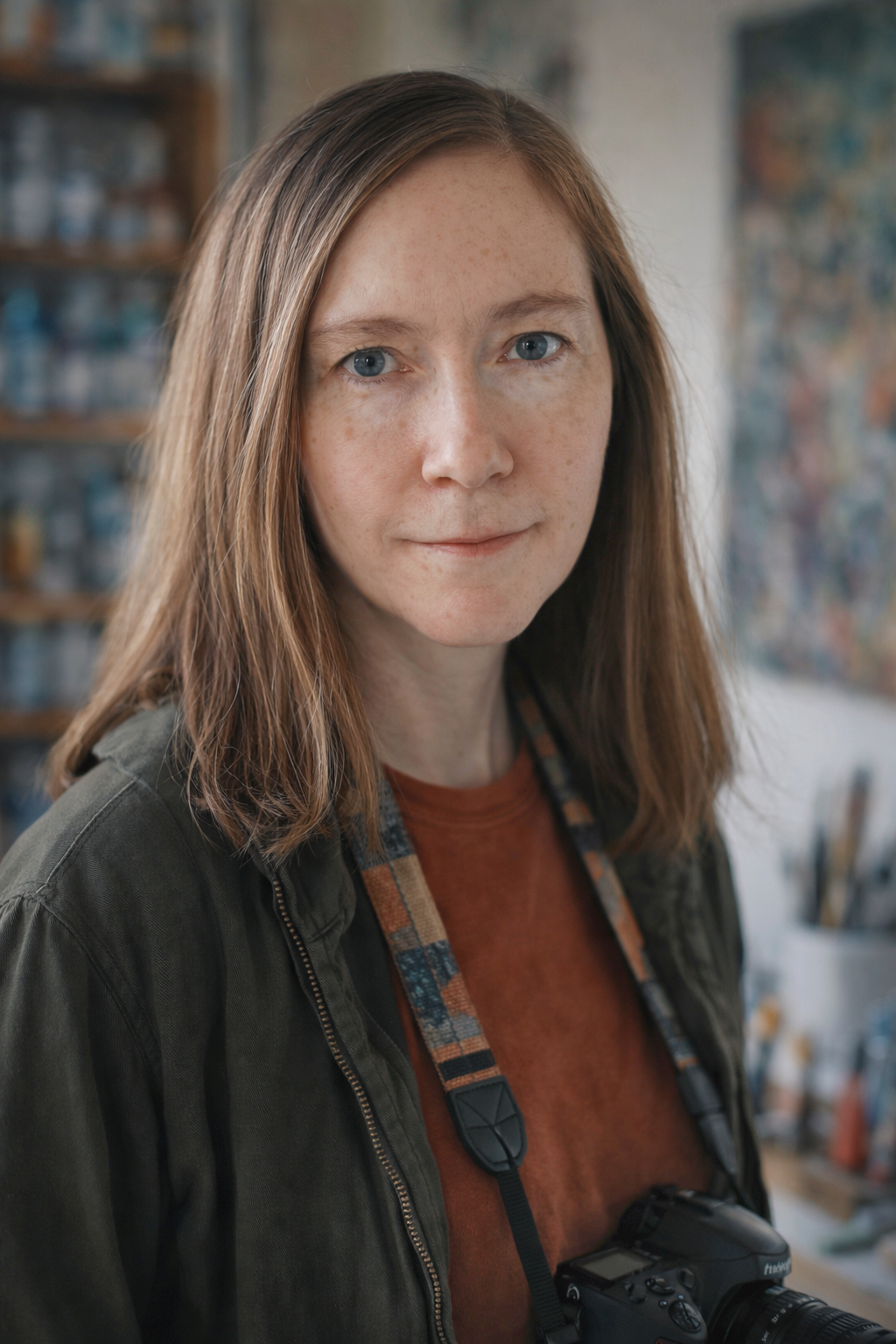
 I was fortunate to grow up surrounded by great natural beauty: in the woods, fields and gardens of rural Albemarle County, Virginia. Far from the nearest neighbor, my parents’ property, “Evergreen,” had a lush rolling lawn—bordering acres of woods—flower gardens, scattered shade pines, and on clear days a magnificent view of the Southwestern mountains. As a child walking among the shade trees and through my mother’s perennial and flower gardens—and later, through the surrounding woods with its streams, hollows, and vistas—I always found genuine peace. My mother’s carefully cultivated roses, peonies, flowering shrubs and trees, and the beauty of the ancient mountains first found voice in my poetry. My photographic work, developed later, reflects my growing intimacy with the natural world and a wider appreciation of its moods and subtleties.
The splendid beauty of flowers and landscapes in the scenic country where I still reside has always suggested to me the deepest mysteries of life and a magical transcendence.
Brief Biography
Rebecca Lilly is a writer, photographer, and lecturer whose work moves fluidly between poetry, philosophy, and visual storytelling. She holds an M.F.A. in poetry from Cornell University and a Ph.D. in philosophy from Princeton University, and she brings this rich interdisciplinary background to her work as a researcher and writing mentor.
Rebecca is the author of several acclaimed poetry collections, including Creatures Among Us (Broadstone, 2019), a celebrated book of prose poetry. Her earlier collection, You Want to Sell Me a Small Antique (Gibbs Smith), won the Peregrine Smith Poetry Prize, and her haiku and micropoetry have been published in multiple collections by Red Moon Press.
Her writing has appeared widely in respected journals in the U.S. and internationally, including Conjunctions, Hotel Amerika, The Iowa Review, London Magazine, New American Writing, Rosebud, and Stand. A longtime contributor to the haiku tradition, her work is also featured in Haiku in English: The First Hundred Years (Norton, 2013), reflecting her lasting influence and presence in the field.